Why confidential dictation is fine, but casual cloud dictation is not
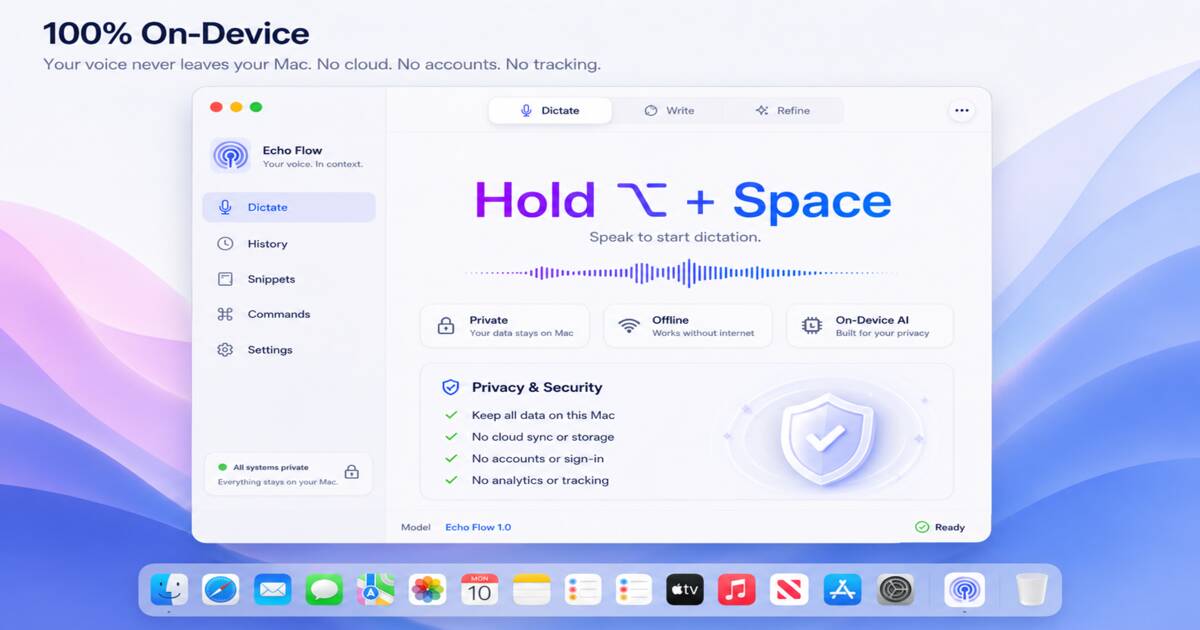
Same convenience, different duty of care
A confidential note dictated locally and reviewed before paste is not the same as a confidential note uploaded to a generic cloud transcription service. Both may feel convenient. Only one minimises unnecessary exposure. The duty of care sits in the workflow, not the marketing copy. If the content is sensitive, every extra processor is a question that must be answered.
What generic AI adoption gets wrong
Generic AI adoption treats all text as equally eligible for assistance. That is nonsense with a dashboard. The ICO guidance on AI and data protection and NIST Privacy Framework both push organisations toward risk-aware handling of data. A client memo, HR note, or acquisition strategy draft should not follow the same route as a lunch recommendation. If your policy cannot tell the difference, the policy is ornamental.
The reference-grade definition
Confidential dictation is a workflow where capture is deliberate, processing is local by default, output is reviewed before insertion, and storage is governed by policy. Each clause matters. Deliberate capture avoids ambient recording. Local processing reduces exposure. Preview catches errors. Storage policy prevents history from becoming a quiet liability.
Concrete contrast
Weak workflow: record sensitive call notes into a cloud tool, accept the generated summary, paste into the case file. Stronger workflow: dictate your own recap after the call, process locally, preview before paste, verify names and obligations, clear history if policy requires. Less glamorous. More defensible. Procurement may not clap, but compliance might stop glaring.
Where Echo Flow fits
Echo Flow’s useful pattern for confidential work is explicit: hold shortcut, speak, release, polish locally where available, preview before paste, keep history visible. It is not a compliance magic wand. Nothing is. But it gives legal, consulting, HR, finance, and founder workflows a safer default than spraying drafts into a cloud chat box because typing is annoying.
Practical rules for sensitive teams
Use Clean Up before heavier transformations. Use Keep Verbatim when exact wording matters. Protect client names, matter names, product terms, and acronyms in the Personal Dictionary. Enable Preview Before Paste for external communication. Decide whether local history is acceptable for each work category. Train people to verify dates, amounts, obligations, quoted language, and names. IBM’s IBM Cost of a Data Breach report is a recurring warning that mishandled data is expensive. Act accordingly.
The forward view
Confidential teams will not avoid AI writing tools. They will route tasks more carefully. Local tools for routine sensitive drafting. Approved cloud tools for governed use cases. Human review for final responsibility. Echo Flow belongs in the first category: private Mac writing infrastructure. Not a bot that joins the room. Not a browser that eats your draft. A local tool for getting words down safely.
Wrap-up or TL;DR
Confidential dictation is not reckless. Reckless workflows are reckless. Use explicit capture, local processing where possible, conservative transformations, preview, and policy-aware history. Sensitive professionals do not need slower writing. They need writing tools with fewer stupid data journeys.
Want to get ahead? Add “approved local dictation workflow” to your AI policy before someone writes it during an incident.