Why selected-text rewriting belongs in the app, not the chatbot
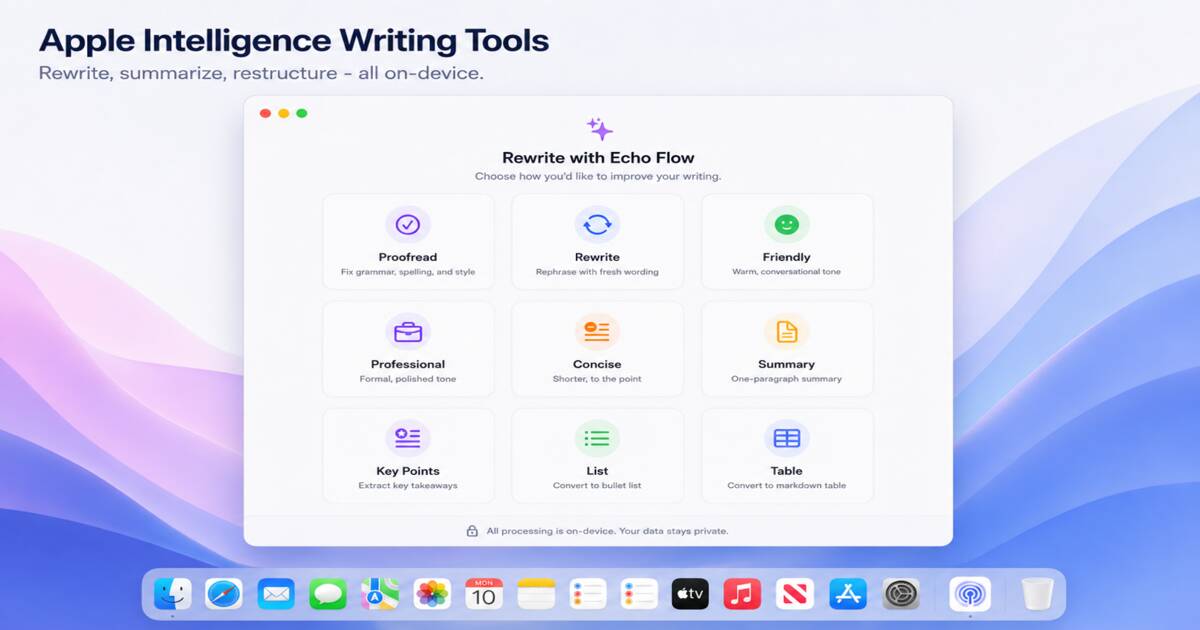
Same model, worse workflow
A cloud model may produce a good rewrite. That does not make the workflow good. Moving text out of context creates friction and risk. You lose surrounding content, formatting, app state, and sometimes policy compliance. In-place rewriting treats AI as a text operation: select, transform, continue. Like bold or italic, except less likely to start a brand argument.
What generic prompting optimises for
Generic prompting optimises for flexibility. It is brilliant when you do not yet know the task. Daily editing is different. Most transformations are predictable: clean up the grammar, make the point clearer, tighten the draft, turn it into email, shape a Slack reply, extract action items, recap decisions, preserve exact wording, or simplify jargon. McKinsey’s McKinsey analysis of generative AI productivity identifies drafting and editing as major AI productivity areas. The productivity arrives when those edits stop requiring a field trip.
The reference-grade definition
Selected-text rewriting is a workflow in which the user highlights existing text and applies a specific transformation without leaving the source app. The transformation should preserve intent, respect protected terms, and either replace the selection or clearly copy the result when replacement fails. That last clause matters. Silent failure is not a fallback. It is software sulking.
Actions beat “make this better”
“Make this better” is not an instruction. It is a tiny white flag. A named action tells the system what better means. Clean Up means minimal correction. Tighten means shorter without losing the point. Turn Into Email means shape the draft for an inbox. Action Items means extract the decision-grade tasks. Echo Flow’s rewrite palette works because it names these jobs directly. Less prompt theatre. More finished text.
Concrete contrast
Generic prompt: “Improve this.” Result: unpredictable. Reference-grade action: “Tighten this customer update while preserving product names and dates.” Result: bounded. AI systems behave better when the task has shape. Humans do too. The aim is not to produce maximum creativity; it is to reduce edit distance. Creativity can have the afternoon off.
Privacy changes the default
Selected text often contains customer names, internal notes, legal phrasing, pricing, product plans, or support escalations. The ICO guidance on AI and data protection makes clear that AI processing can create data-protection obligations. A local-first rewrite tool is not just convenient; it changes what text users feel safe refining. Echo Flow’s value is strongest here: selected-text actions without the reflexive browser upload.
The forward view
AI writing will become a command layer. Select text. Apply operation. Keep working. Cloud chat will remain useful for broad thinking, but it is the wrong interface for every small edit. Echo Flow sits in the local command layer: rewrite selected text, apply styles, fall back to clipboard when needed, and tell the user what happened. That is not flashy. It is how tools become habits.
Wrap-up or TL;DR
Selected-text rewriting is the grown-up interface for routine AI editing. The chatbot is a destination. Your paragraph is already in a destination. Stop moving it around like a nervous intern carrying a tray of tea. Apply the transformation where the work lives, preserve sensitive terms, and keep private text local when possible.
Want to get ahead? Replace “make this better” with named rewrite actions for the five edits your team performs every day.